


Skip to content
Jason Martin, MD, FACS — board-certified plastic surgeon in Denver, Colorado

Body

Thigh LiftDenver, CO

Remove loose, sagging thigh skin for a firmer, smoother contour.

Thigh Lift Surgery

If the skin on your thighs has become loose and saggy, often after major weight loss or with age, a thigh lift is the procedure that removes it. A thigh lift, or thighplasty, removes excess skin from the inner or outer thigh and tightens what remains for a firmer, smoother shape. When skin loses its elasticity, it no longer conforms to the muscle underneath, which leaves loose folds that diet, exercise, and even liposuction cannot fix. A thigh lift addresses the skin directly, which is the only thing that corrects it when laxity is the problem.

At his Denver practice, Dr. Jason Martin performs thigh lifts for patients bothered by loose thigh skin, with careful attention to incision placement. As a board-certified plastic surgeon, he is upfront about the scar trade-off that comes with removing the skin.

At a Glance

Thigh Lift at a Glance

These are typical starting points. Dr. Martin confirms the specifics for your case at your consultation.

Procedure time
About 2 to 3 hours, depending on the type and extent
Anesthesia
General anesthesia
Downtime
Most people return to desk work in about 1 to 2 weeks, with lower-body activity limited for 4 to 6 weeks
When you'll see results
A firmer thigh contour is visible right away, with the final result at 3 to 6 months
Results last
Long-lasting with a stable weight
Scars
Placed in the inner-thigh crease or along the groin, depending on the type
Cost
$8,000 – $12,000

Medial (inner) thigh at the low end; vertical/more extensive at the upper end.

Jason Martin, MD — board-certified plastic surgeon in Denver, Colorado

What it addresses

What a Thigh Lift Addresses

A thigh lift treats loose, excess skin on the thighs that has lost its elasticity. This most often happens after significant weight loss, when the skin that stretched to cover larger thighs is left hanging, or with age, as the skin gradually loosens. The result is folds and sagging on the inner or outer thigh that no amount of exercise can tighten, because the muscle underneath is not the issue.

When the concern is stubborn fat with firm, elastic skin, liposuction alone can reshape the thigh without the scar of a lift. The consultation is where Dr. Martin determines whether your thighs need skin removed, fat removed, or both.

Your options

Your Thigh Lift Options

The right type of thigh lift depends on where your loose skin sits.

Most common

Inner (Medial) Thigh Lift

A medial thigh lift is best for loose skin on the inner thigh.

It removes excess skin from the inner thigh, with the incision placed in the crease where the thigh meets the groin so it stays hidden. This is the most common type and addresses the area most people are bothered by.


Outer (Lateral) Thigh Lift

A lateral thigh lift is best for loose skin on the outer thigh and hip.

It addresses the outer thigh and is often part of a more extensive lift after major weight loss, sometimes done together with a lower body lift.

Vertical Thigh Lift

A vertical thigh lift is best for extensive loose skin along the length of the thigh.

It removes skin both around and down the thigh for significant laxity, in exchange for a longer scar. It suits patients with a large amount of hanging skin after major weight loss.

Candidacy

Are You a Good Candidate?

You may be a good candidate for a thigh lift if you have significant loose, sagging thigh skin, you are at or near a stable weight, and you understand the scar trade-off that comes with the procedure. The best candidates have stretched skin that liposuction alone will not tighten, often after major weight loss.

You may be a good candidate if you:

  • Have significant loose, sagging thigh skin
  • Are at or near a stable weight
  • Understand the scar trade-off that comes with the procedure
  • Have stretched skin that liposuction alone will not tighten, often after major weight loss

A thigh lift involves an honest conversation about scars, and we have it upfront. Removing the loose skin requires an incision, placed in the inner-thigh crease or along the groin depending on the type, and while Dr. Martin keeps it as discreet as possible and it fades over time, it does not disappear. For most patients who have lived with loose, chafing thigh skin, a well-placed scar is a fair trade for thighs that feel comfortable again. If your laxity is mild, AccuTite may be the better path.

Jason Martin, MD, FACS, board-certified plastic surgeon

Experience & judgment

Dr. Martin's Approach

Dr. Martin plans the incision based on where your loose skin sits, placing it in the natural crease wherever possible to keep it hidden. He has written about thigh-lift scars and what to expect, because setting that expectation honestly is part of a good outcome.

What he brings to that work

  • Jason Martin, MD, FACS, board-certified by the American Board of Plastic Surgery and a Fellow of the American College of Surgeons
  • Fellowship-trained in aesthetic plastic surgery
  • Adjunct professor with the Department of Plastic Surgery at the University of Colorado
  • Named a Top Doctor by 5280 magazine in 2024
American Board of Plastic Surgery American Society of Plastic Surgeons The Aesthetic Society
More About Dr. Martin

The procedure, step by step

What to Expect From the Procedure

A thigh lift is performed under general anesthesia. The steps follow a consistent sequence:

  1. 01

    The thigh is marked

    while you are standing, so the amount and location of skin to remove is planned accurately.

  2. 02

    The incision is made

    in the inner-thigh crease, along the groin, or down the thigh, depending on the type of lift.

  3. 03

    Excess skin is removed,

    and liposuction is used at the same time when stubborn fat is also part of the picture.

  4. 04

    The remaining skin is tightened and closed

    in layers to support healing, and a compression garment is placed.

Recovery

Your Recovery, Step by Step

Recovery from a thigh lift focuses on protecting the incision while you move carefully early on. The pattern below is typical; Dr. Martin gives you specific instructions for your case.

  1. The first week

    Walking is limited and you will move carefully to protect the inner-thigh incision. Soreness and swelling are most noticeable now and are well controlled.

  2. About 1 to 2 weeks

    Most people return to desk work, still wearing a compression garment.

  3. About 4 to 6 weeks

    Lower-body activity and exercise gradually resume as Dr. Martin clears you.

  4. Months

    Swelling settles and the scar continues to fade and flatten over about a year as it matures.

Investment

What Does a Thigh Lift Cost in Denver?

In Denver, a thigh lift generally runs from about $8,000 to $12,000, depending on the type of lift (medial, lateral, or vertical), the extent of skin removal, whether liposuction is combined, and anesthesia and facility fees. A medial (inner) thigh lift sits at the low end of the range, while a vertical or more extensive lift sits at the upper end.

At your consultation you will receive a clear, itemized quote for your specific plan, and our team will walk you through financing options so the cost fits your budget.

Request a Consultation

Common questions

Frequently Asked Questions

How much does a thigh lift cost in Colorado?

A thigh lift in Denver generally runs from about $8,000 to $12,000, depending on the type of lift, the extent of skin removal, whether liposuction is combined, and anesthesia and facility fees. A medial (inner) thigh lift sits at the low end, while a vertical or more extensive lift sits at the upper end. You will receive an itemized quote for your specific plan at your consultation, along with financing options.

Where is the scar from a thigh lift?

The scar location depends on the type of lift. A medial (inner) thigh lift places the scar in the crease where the thigh meets the groin, where it stays hidden. A vertical thigh lift runs down the inner thigh for more extensive skin removal. Dr. Martin places the incision as discreetly as the amount of loose skin allows and reviews exactly where it will fall before surgery.

What is the best procedure for saggy inner thighs?

It depends on what is causing the sagging. Loose skin calls for a thigh lift, stubborn fat with firm skin calls for liposuction, and mild laxity may respond to AccuTite. Dr. Martin examines your thighs and tells you which one will give you the result you want.

What is the difference between an inner and outer thigh lift?

An inner (medial) thigh lift removes loose skin from the inner thigh, the area most people are bothered by, with a hidden groin-crease incision. An outer (lateral) thigh lift addresses the outer thigh and hip and is often part of a more extensive lift after major weight loss.

What is the best age for a thigh lift?

There is no single best age. What matters is that you have loose skin that bothers you, you are at a stable weight, and you are in good health. Many patients have a thigh lift after reaching their goal weight, when the loose skin is what remains.

How long is recovery from a thigh lift?

Most people return to desk work in about 1 to 2 weeks. Lower-body activity and exercise are limited for about 4 to 6 weeks while the inner-thigh incision heals, and the scar continues to mature over the following year.

From Dr. Martin

Articles on Thigh Lift Surgery

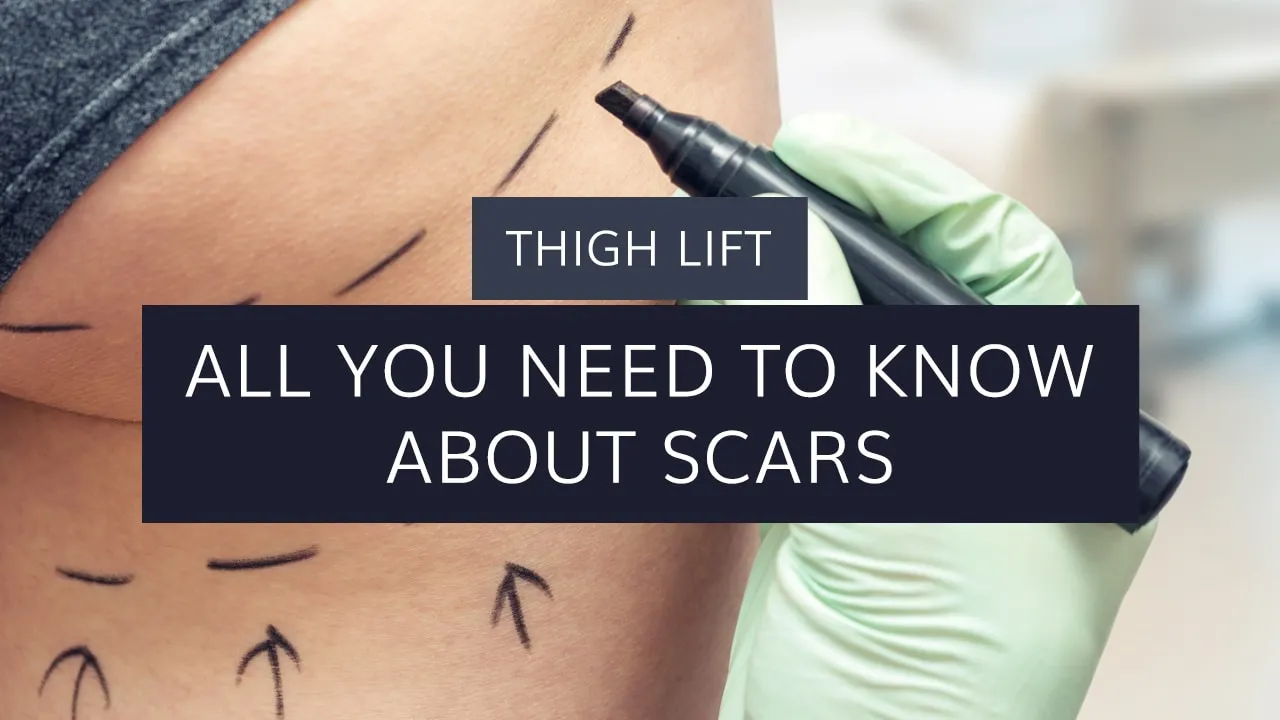
For a closer look at what a thigh lift involves, this article from Dr. Martin goes deeper:

Begin

Schedule Your Consultation

The best way to know whether a thigh lift is right for you is an exam with the surgeon who performs it. Dr. Martin will assess your skin and the location of the laxity, explain your options and the scar trade-off honestly, and build a plan around your goals. Take our virtual consultation to get started, or call our Denver office at (303) 321-1439 to schedule your visit.

(303) 321-1439