

Body
Remove excess male breast tissue for a flatter, firmer chest.
Gynecomastia Surgery
If you are a man bothered by excess breast tissue, you are far from alone, and surgery is the reliable way to correct it. Gynecomastia, the medical term for enlarged male breast tissue, affects a large share of men at some point in their lives, and it can be a real source of self-consciousness in a shirt or at the beach. Gynecomastia surgery, also called male breast reduction, removes the excess glandular tissue and fat to flatten and firm the chest. For men who have tried diet and exercise without success, often because the issue is firm glandular tissue rather than fat, it is the treatment that actually resolves it.
At his Denver practice, Dr. Jason Martin performs male breast reduction with attention to a natural, masculine chest contour and discreet incisions. As a board-certified plastic surgeon, his first step is identifying what kind of tissue is causing the problem, because that determines the right treatment.
At a Glance
These are typical starting points. Dr. Martin confirms the specifics for your case at your consultation.
Depending on whether glandular excision and liposuction are combined.
A compression vest is worn for 4 to 6 weeks.
A flatter chest is visible right away.
A stable weight keeps the fatty component from returning.
Where it is well hidden.
Liposuction-only at the low end; glandular excision with liposuction at the upper end.

What it is
The most important thing to understand about gynecomastia is that there are two different kinds, and they call for different treatment.
True gynecomastia is the growth of actual glandular (breast) tissue, which feels firm and sits behind the nipple. Because it is dense tissue rather than fat, it does not respond to diet, exercise, or weight loss, and it has to be removed surgically.
Pseudogynecomastia is excess fat in the chest without significant glandular tissue. This responds to weight loss and can often be treated with liposuction alone.
Many men have a combination of both. Knowing which one you have, which Dr. Martin determines on exam, is what tells you whether liposuction alone will work or whether the glandular tissue needs to be removed for a flat result.
GLP-1 & Zepbound
This is one of the most common questions men are asking right now, as GLP-1 medications like Zepbound, Ozempic, and Mounjaro have become widespread. The honest answer depends on which kind of gynecomastia you have.
GLP-1 medications cause real weight and fat loss, so for pseudogynecomastia, the chest fullness that comes from excess fat, they can reduce the appearance of enlarged breasts. If your chest is full because of fat, losing that fat may be enough.
What these medications cannot do is shrink glandular tissue. True gynecomastia is dense breast tissue, not fat, and no weight-loss drug removes it. In fact, some men who lose a significant amount of chest fat on a GLP-1 are left with the firm glandular tissue still visible underneath, and a flatter surrounding chest can make it stand out more. For true gynecomastia, surgery is still the answer.
Causes & types
Gynecomastia is usually driven by a shift in the balance of hormones, and it can appear at different stages of life:
Because some causes are temporary and a few can point to other health matters, Dr. Martin takes a history and examines the chest before recommending surgery, rather than treating every case the same way.
Candidacy
You may be a good candidate for gynecomastia surgery if you have excess breast tissue that has not responded to diet and exercise, you are in good general health, and your chest size has been stable. For adolescents, it is often best to wait until puberty-related changes have settled, since some cases resolve on their own.
You may be a good candidate if you:
Gynecomastia surgery is honest about what it does. It removes the excess tissue for a flatter, firmer chest; it is most effective once your weight is stable, so that the result reflects the tissue removed rather than fluctuating with your weight. If your enlargement is purely fatty, weight loss or liposuction may be all you need, and Dr. Martin will tell you so rather than recommend more surgery than the situation calls for.

Experience & judgment
Dr. Martin tailors the technique to the tissue. When the problem is glandular, he removes it through a small, discreet incision; when fat is involved, he adds liposuction to refine the contour and blend the result into the surrounding chest for a natural, masculine shape.
What he brings to that work



The procedure, step by step
Gynecomastia surgery is an outpatient procedure. The steps follow a consistent sequence:
according to the plan made at your consultation, and anesthesia is given.
along the lower edge of the areola, where the scar is well hidden.
through that incision when true gynecomastia is present.
at the same time to remove excess fat and refine the contour when fat is part of the picture.
and a compression vest is placed to support the chest and help it settle into its new shape.
Recovery
Recovery from gynecomastia surgery is usually quicker than men expect. The pattern below is typical; Dr. Martin gives you specific instructions for your case.
The first few days
Some soreness and swelling are normal and well controlled. You will wear a compression vest from the start.
About 1 week
Most men return to desk work, still wearing the compression vest.
About 4 to 6 weeks
The compression vest is worn through this period, and exercise gradually resumes as Dr. Martin clears you.
Months
Swelling settles and your final, flatter chest contour emerges over 3 to 6 months.
Swelling settles and your final, flatter chest contour emerges over 3 to 6 months.
Investment
In Denver, gynecomastia surgery generally runs from about $6,000 to $10,000, depending on whether the correction is glandular excision, liposuction, or both, the extent of tissue removed, and anesthesia and facility fees. A fat-only case treated with liposuction sits at the lower end, while glandular excision combined with liposuction is more involved.
At your consultation you will receive a clear, itemized quote for your specific plan, and our team will walk you through financing options so the cost fits your budget.
Proof
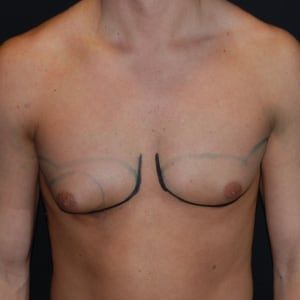
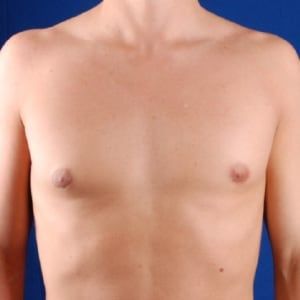
Photographs of real patients are the clearest way to see what male breast reduction can do for the shape of the chest, since the right technique depends on the type of tissue.
Results vary from patient to patient. Photographs are of Dr. Martin's actual patients, shown with their consent.
Common questions
Gynecomastia surgery in Denver generally runs from about $6,000 to $10,000, depending on whether the correction involves glandular excision, liposuction, or both, the extent of tissue removed, and anesthesia and facility fees. You will receive an itemized quote for your specific plan at your consultation, along with financing options.
It depends on the type. GLP-1 medications like Zepbound reduce body fat, so they can improve pseudogynecomastia, the chest fullness caused by excess fat. They do not shrink glandular tissue, so true gynecomastia, which is dense breast tissue, still requires surgery. In some cases, losing chest fat on a GLP-1 makes the firm glandular tissue underneath more noticeable.
Gynecomastia is firm glandular (breast) tissue that sits behind the nipple and does not respond to weight loss. Chest fat, or pseudogynecomastia, is fatty tissue that does respond to weight loss and liposuction. Many men have both. Dr. Martin determines which you have on exam, since it decides the right treatment.
If your enlargement is purely fatty (pseudogynecomastia), weight loss and exercise can help, and liposuction can refine it. True gynecomastia, the glandular kind, does not respond to diet, exercise, or weight-loss medication and requires surgical removal for a flat chest. The only way to know which you have is an exam.
Most men return to desk work in about a week and wear a compression vest for 4 to 6 weeks. Exercise resumes gradually over that period, and the final chest contour settles over 3 to 6 months as swelling resolves.
The glandular tissue that is removed does not grow back, so true gynecomastia is permanently corrected. The fatty component can return with significant weight gain, so maintaining a stable weight keeps your results looking their best.
The incision is small and placed along the lower edge of the areola, where it blends into the natural border and is difficult to see once healed. Liposuction adds only tiny puncture sites. Dr. Martin reviews exactly where the incision will fall before surgery.

Begin
The best way to know what is causing your chest enlargement, and how to fix it, is an exam with the surgeon who performs the surgery. Dr. Martin will examine your chest, determine whether the tissue is glandular or fatty, explain your options honestly, and build a plan around your goals. Take our virtual consultation to get started, or call our Denver office at (303) 321-1439 to schedule a private consultation.
(303) 321-1439